Korean Bibimbap
Uitgelicht onder: Wereldgerechten
Experience the vibrant and flavorful world of Korean cuisine with this delicious Bibimbap recipe. Packed with fresh vegetables, protein, and a spicy sauce, this dish is a complete meal that is both satisfying and healthy.
Korean Bibimbap is a beloved dish that combines a variety of ingredients, served over rice and topped with a fried egg. The word 'bibimbap' translates to 'mixed rice,' and that's exactly what you do with this dish—mix everything together for a burst of flavors!
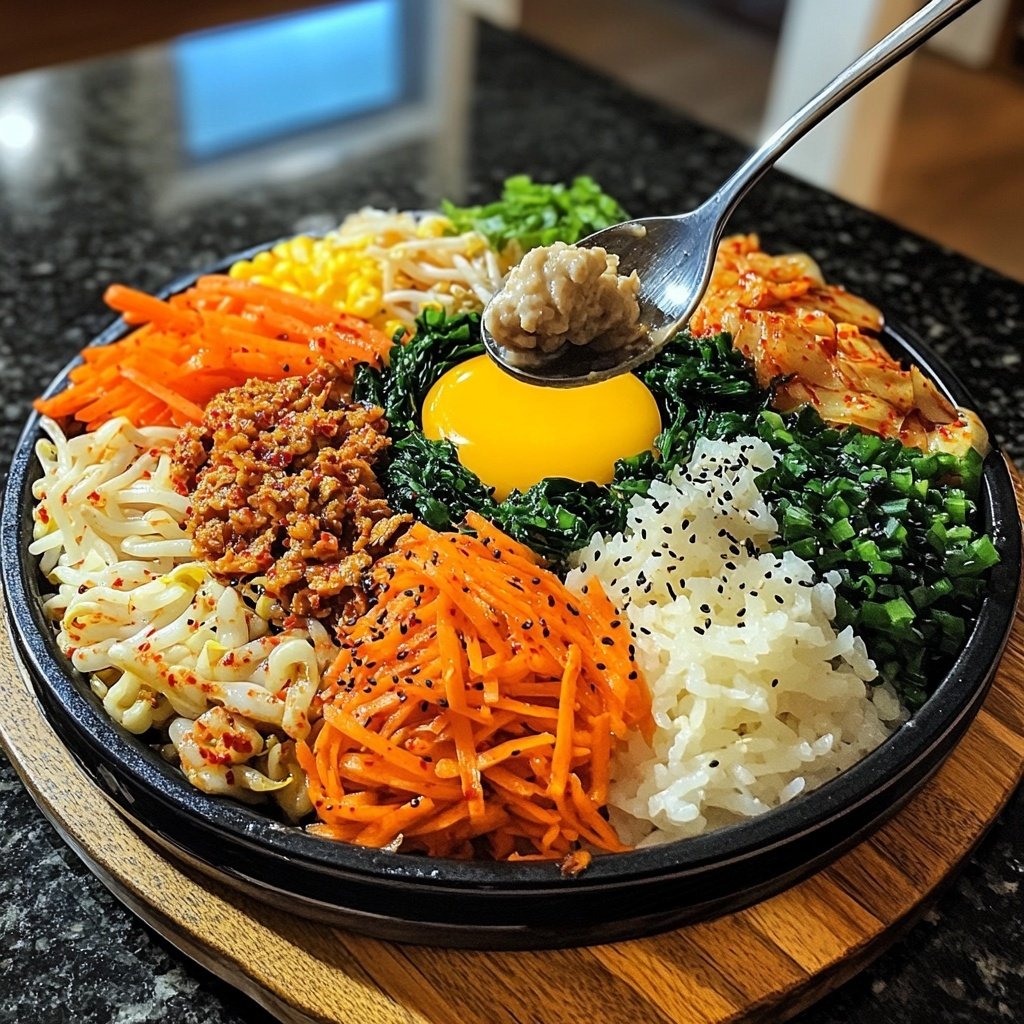
Why You Will Love This Recipe
- Colorful array of fresh vegetables
- Savory and spicy gochujang sauce
- Customizable with your choice of protein
The Essence of Bibimbap
Bibimbap, a traditional Korean dish, is a beautifully arranged bowl that combines rice with a variety of vegetables, protein, and the signature gochujang sauce. The name 'bibimbap' translates to 'mixed rice,' which perfectly captures the essence of this dish. Each ingredient plays a vital role in creating a harmonious balance of flavors and textures, making it a beloved meal among locals and food enthusiasts alike.
The versatility of Bibimbap is one of its most appealing aspects. You can customize this dish with your favorite vegetables, proteins, and sauces, allowing for endless variations. Whether you prefer tofu, beef, chicken, or even seafood, Bibimbap can be tailored to suit your taste and dietary preferences. This makes it not only a delightful meal for any occasion but also a great way to clean out your fridge!
Health Benefits of Bibimbap
This vibrant dish is not only delicious but also packed with nutrients. The combination of fresh vegetables provides an array of vitamins and minerals essential for maintaining a healthy diet. Spinach, for example, is rich in iron and antioxidants, while carrots offer a good source of beta-carotene. By incorporating various colorful vegetables, you provide your body with a diverse range of nutrients.
Additionally, Bibimbap can be a balanced meal when prepared with the right proportions of carbohydrates, proteins, and healthy fats. The rice serves as a great source of energy, while the eggs and your choice of protein contribute to muscle repair and growth. This makes Bibimbap an ideal choice for anyone looking to enjoy a satisfying meal without compromising their health.
Tips for the Perfect Bibimbap
To achieve the best flavor and texture, it's crucial to prepare each vegetable separately. Sautéing them individually allows each ingredient to shine while preventing the flavors from becoming muddled. Consider using seasonal vegetables to enhance freshness and flavor. You can also experiment with different cooking methods, such as grilling or roasting, for a unique twist on your Bibimbap.
Don’t forget the finishing touch: the gochujang sauce! Adjust the amount of gochujang according to your spice tolerance. For a milder taste, you can mix it with a bit of sesame oil or honey. A drizzle of sesame oil just before serving can also add a rich depth of flavor that elevates the dish.
Ingredients
For the Bibimbap
- 2 cups cooked rice
- 1 cup spinach, blanched
- 1 cup carrots, julienned
- 1 cup zucchini, julienned
- 1 cup bean sprouts
- 2 eggs
- 1 tablespoon sesame oil
- Salt to taste
- 1 tablespoon gochujang (Korean chili paste)
Feel free to add more vegetables or protein sources like chicken, beef, or tofu to customize your Bibimbap!
Instructions
Prepare the Vegetables
In a pan over medium heat, add sesame oil. Sauté the carrots, zucchini, and bean sprouts separately until just tender. Season with a pinch of salt and set aside.
Cook the Eggs
In the same pan, fry the eggs sunny-side up until the whites are set but the yolks are still runny.
Assemble the Bibimbap
In a bowl, place a serving of rice. Arrange the sautéed vegetables and blanched spinach on top. Place the fried egg in the center and drizzle with gochujang. Mix well before eating.
Serve immediately and enjoy your delicious homemade Bibimbap!

Professionele Tips
- For added flavor, you can include kimchi or other pickled vegetables as a side.
Serving Suggestions
Bibimbap is a versatile dish that can be served any time of the day. While traditionally enjoyed as a lunch or dinner option, it can also make a hearty breakfast when topped with a fried egg. Pair it with a side of kimchi for an authentic Korean experience, or serve it alongside pickled vegetables for added crunch and tang.
To enhance the presentation of your Bibimbap, consider serving it in a hot stone bowl (dolsot). This method not only keeps the rice warm but also creates a delightful crispy layer at the bottom, adding a unique texture to each bite.
Storage and Reheating
Leftover Bibimbap can be stored in an airtight container in the refrigerator for up to three days. To maintain the freshness of the vegetables, it's best to keep the components separate until you're ready to eat. When reheating, add a splash of water to the rice to prevent it from drying out, and cover it to steam it back to life.
For a quick meal, consider transforming leftover Bibimbap into a stir-fry. Simply add a little oil to a pan, toss in the leftover ingredients, and sauté until heated through. This method can give your leftover dish a new and exciting flavor profile.
Vragen Over Recepten
→ Can I make Bibimbap ahead of time?
Yes, you can prepare the vegetables and rice in advance. Just reheat and assemble when you're ready to eat.
→ What can I substitute for gochujang?
If you can't find gochujang, you can use a mix of chili paste and a bit of honey or sugar for sweetness.
→ Is Bibimbap vegetarian-friendly?
Absolutely! You can make it completely vegetarian by using tofu or omitting the egg.
→ Can I use brown rice instead of white rice?
Yes, brown rice is a great option for a healthier alternative.
Korean Bibimbap
Gemaakt door: Octavia Bellamy
Recepttype: Wereldgerechten
Vaardigheidsniveau: Intermediate
Eindportie: 2 servings
Wat je Nodig Hebt
For the Bibimbap
- 2 cups cooked rice
- 1 cup spinach, blanched
- 1 cup carrots, julienned
- 1 cup zucchini, julienned
- 1 cup bean sprouts
- 2 eggs
- 1 tablespoon sesame oil
- Salt to taste
- 1 tablespoon gochujang (Korean chili paste)
Stappen
In a pan over medium heat, add sesame oil. Sauté the carrots, zucchini, and bean sprouts separately until just tender. Season with a pinch of salt and set aside.
In the same pan, fry the eggs sunny-side up until the whites are set but the yolks are still runny.
In a bowl, place a serving of rice. Arrange the sautéed vegetables and blanched spinach on top. Place the fried egg in the center and drizzle with gochujang. Mix well before eating.
Extra Tips
- For added flavor, you can include kimchi or other pickled vegetables as a side.
Voedingswaarde (Per Portie)
- Calories: 600 kcal
- Total Fat: 20g
- Saturated Fat: 4g
- Cholesterol: 186mg
- Sodium: 500mg
- Total Carbohydrates: 90g
- Dietary Fiber: 7g
- Sugars: 5g
- Protein: 18g